Beyond the Thesis: Alumni Insights and Innovations
Discover the transformative journeys of UTM alumni as they navigate the path from doctoral research to influential roles in academia and beyond.
Forum Overview
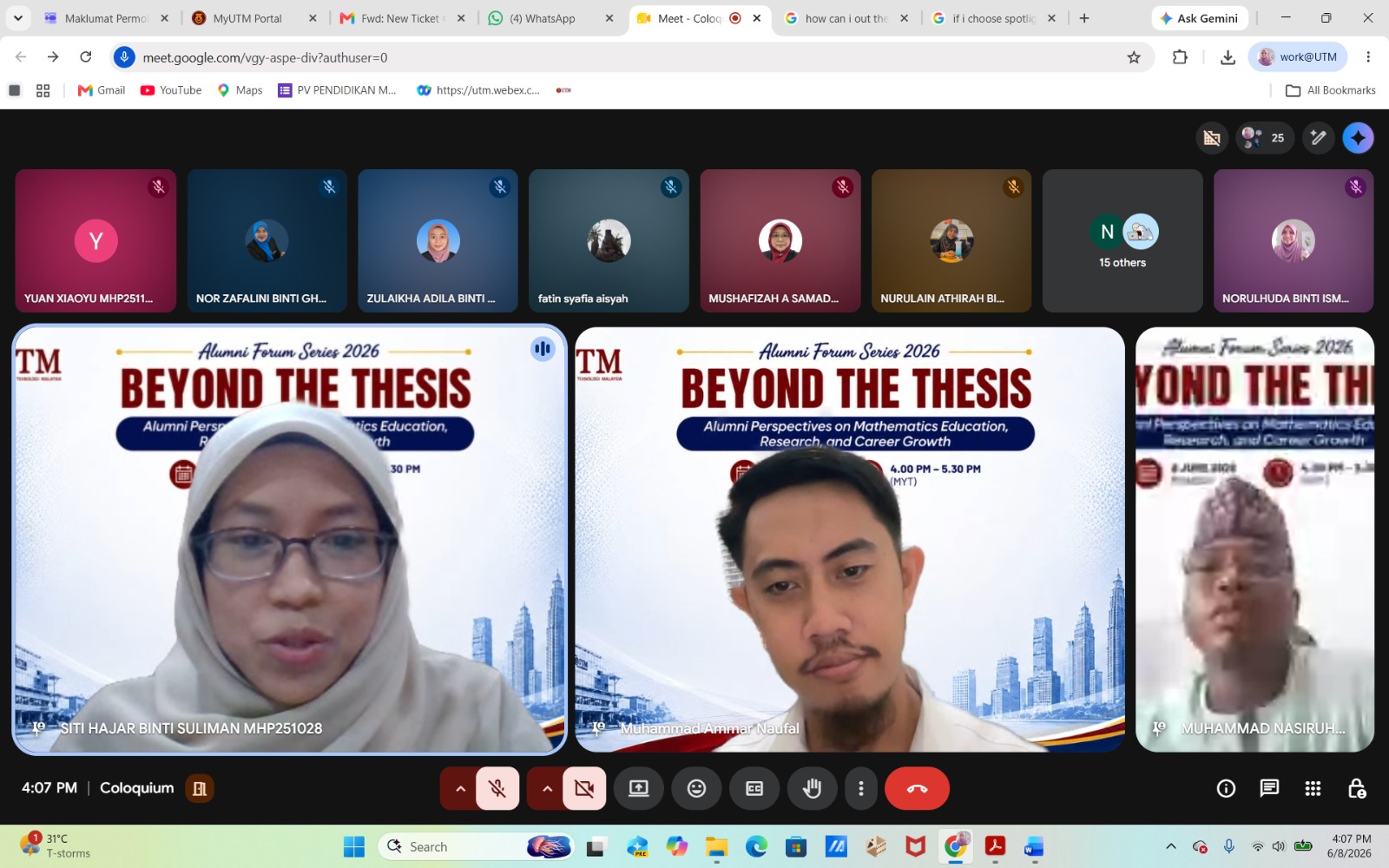
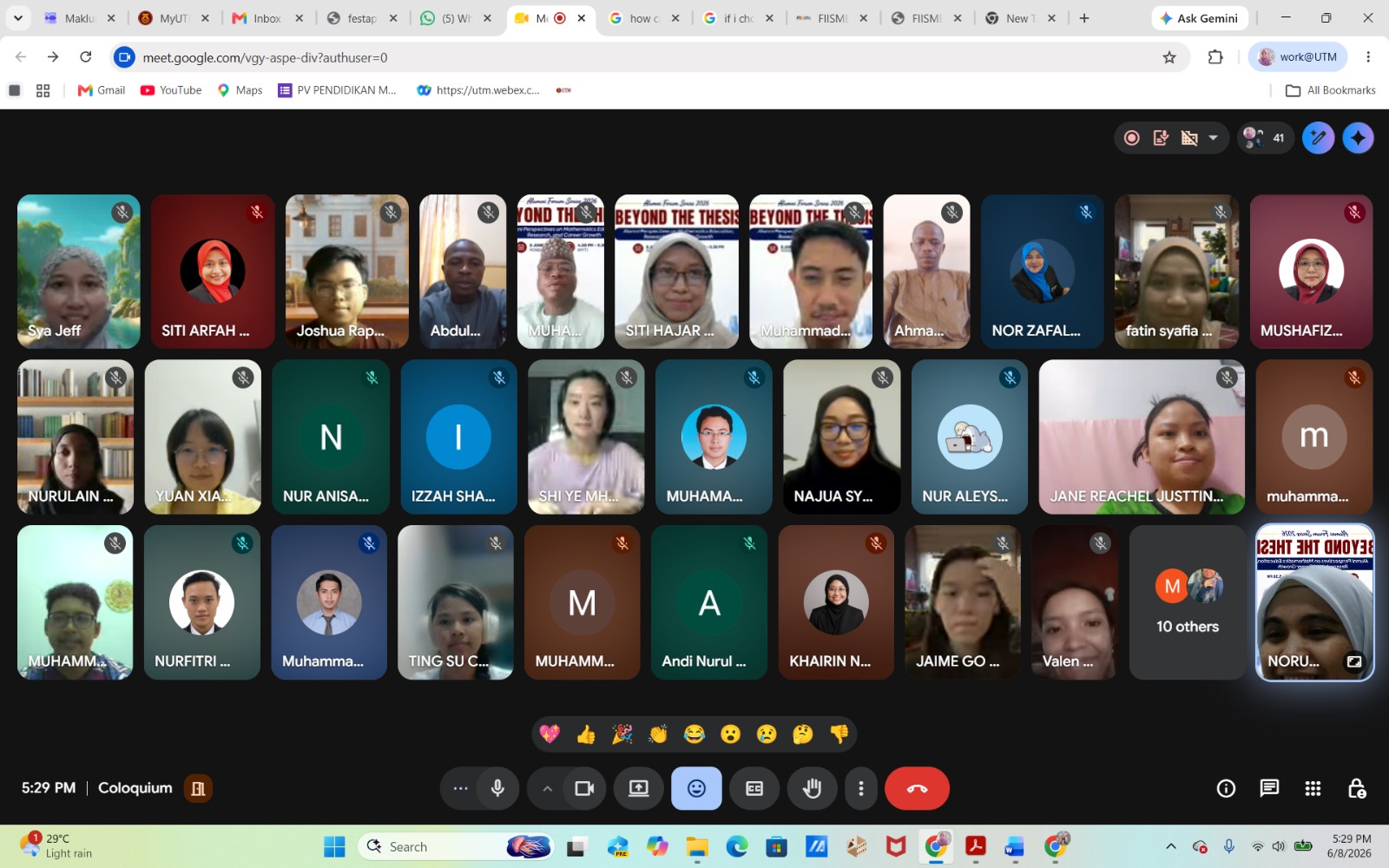
The forum ‘Beyond the Thesis: Alumni Perspectives on Mathematics Education’ was a pivotal event that highlighted the transition from academic research to professional leadership. Held on June 8, 2026, it brought together esteemed alumni to discuss the evolving landscape of mathematics education. Key themes included the integration of AI in learning, the importance of critical thinking, and strategies for academic and professional growth. This gathering served as a platform for sharing insights and fostering connections among educators dedicated to advancing the field.
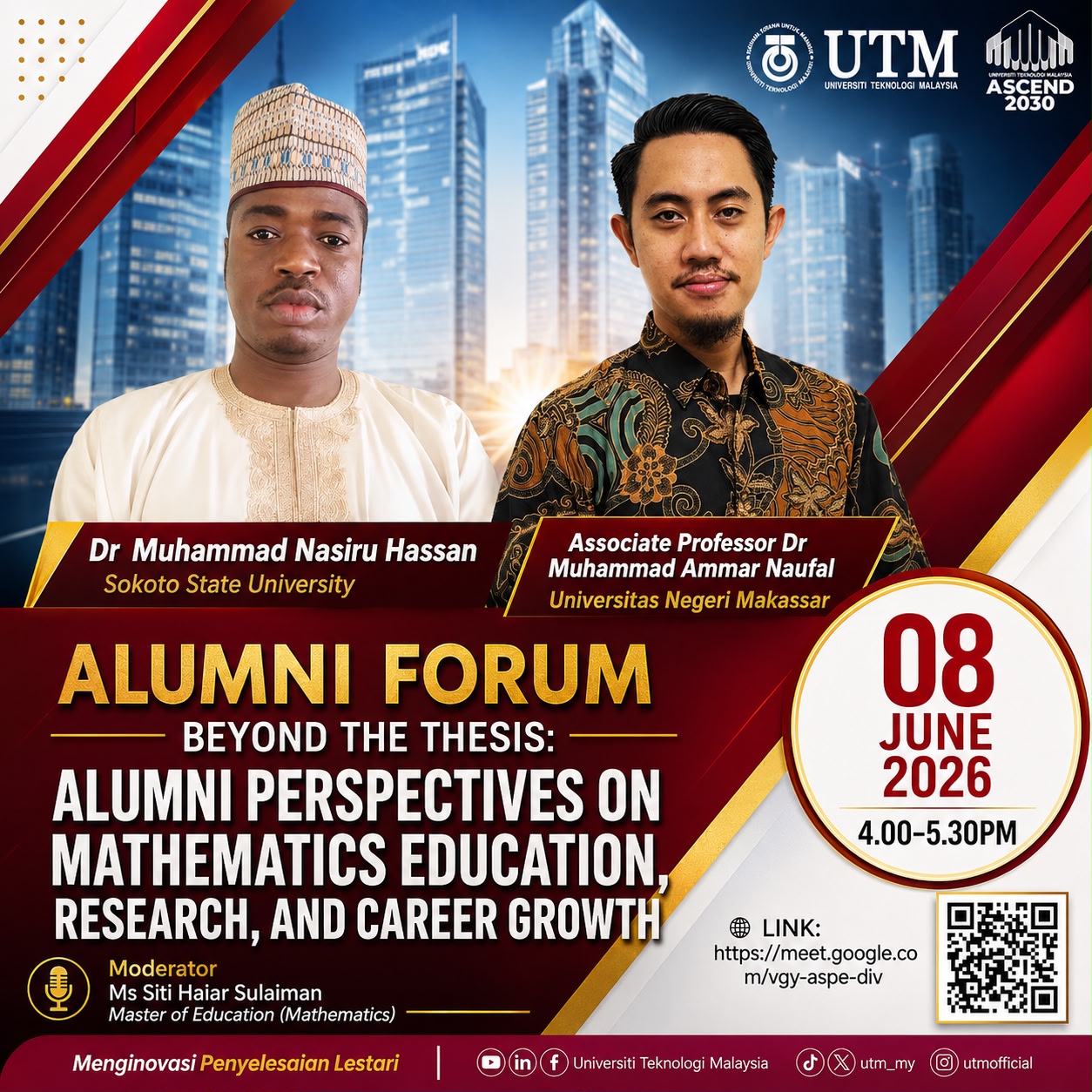
The journey of a researcher does not conclude with the submission of a thesis; rather, it marks the start of a professional trajectory that influences policy, practice, and future learners. A recent forum titled “Beyond the Thesis: Alumni Perspectives on Mathematics Education, Research, and Career Growth” on 8 June 2026, brought together two distinguished alumni from the University of Technology Malaysia (UTM) to share their experiences transitioning from doctoral students to academic leaders. The forum featured Associate Professor Dr. Muhammad Ammar Naufal, Coordinator of the International Class Program at Universitas Negeri Makassar, Indonesia, and Dr. Muhammad Nasiru Hassan, Deputy Dean of the Post Graduate School at Sokoto State University, Nigeria.
The transition from undergraduate to postgraduate studies requires a fundamental shift in mindset. Dr. Ammar emphasized that while undergraduate work often focuses on technical writing, PhD studies demand critical thinking and the ability to justify theoretical selections. He noted that his experience with strict supervisors ultimately built the confidence necessary to succeed during his viva voce. Similarly, Dr. Nasiru highlighted that the journey provides a deeper understanding of research and practical solutions to the challenges of academic supervision. The landscape of mathematics education is shifting, particularly with the rise of Artificial Intelligence (AI). Dr. Ammar observed that while AI is a powerful tool, it can also lead to decreased focus among students. To counter this, Dr. Nasiru argued that researchers should not condemn AI but rather leverage it by aligning its use with local culture and existing artifacts to develop better educational solutions. The primary goal remains the cultivation of critical thinking, which is essential for societal innovation.
To help current students succeed both academically and professionally, the panelist offered several strategic insights. Dr. Ammar introduced the ATM approach to research which are Adopt quality research, Imitate established structures and logic (without copying content), and Modify the approach to fit a specific context or culture. Students should be proactive and respectful, taking the time to understand their supervisor’s specific working style whether they prefer big picture ideas or frequent, detailed updates. Consistency and Well-being: Following principles of Atomic Habits, students are encouraged to build small, consistent routines rather than waiting for the perfect mood to work. Prioritizing physical and mental health is vital, as sacrificing sleep is unsustainable in the long run. Students should build a community because working in isolation is discouraged. As example, students can join reading circles or organizations like the International Student Society (ISS) for social and academic support.
For preparing for the global job market by reflecting on their paths, both panelists wished they had focused on professional networking and building a publication track record earlier in their studies. For those entering the job market, they recommended students to showcased experience. Beyond the degree, success requires a strong CV, networking, and a professional presence on platforms like LinkedIn. Developing Soft Skills also important. Unexpectedly, skills in public speaking and the ability to explain complex fields simply were cited as some of the most valuable outcomes of a PhD. For understanding research impact, Dr. Ammar and Dr. Nasiru clarified that students should not worry if their research is perceived as having a low impact. The goal of a PhD is to solve specific problems within a field, not to solve every global issue at once.
As a conclusion success beyond the thesis requires a blend of research excellence, staying ahead of educational trends, and proactive networking. By balancing professional demands with personal well-being and a strong spiritual foundation, postgraduate students can successfully transition into impactful roles within the global academic community.